Tuesday, May 25, 2010

The Sacking of Elm Street

I don't remember exactly how old I was, but it was between the ages of 5 and 10 years, and I lived on Fleetwood street in Longview, Texas.  I had two neighbors both names Mike.  There was "Big Mike" who was at least a year or two older than me, and "Little Mike" who was I think a year or so younger than me.  This story involves "Big Mike" (with whom I have long since lost contact, but given that I blame all of my own delinquency during those years of my life on him, I have no doubt he went on to have a long life of crime and mischief.)

It was one of those long days of summer and we had nothing important to do, so Mike and I went walking up the street to Elm Street where they were building a new home that they were in the habit of leaving unlocked.  We sauntered in and, enjoying the new sheetrock smell, proceeded to play some before Mike got the idea to open up the cans of paint and dump them on the floor.  Sounded like fun to me and, grabbing a screwdriver left discarded on the floor, we proceeded to open up each and every can of paint in the garage.  Having them open we knocked them over and I think we splashed paint on the walls as well.  Getting a little bored I looked outside and saw a garden hose attached to a faucet.  Curious I turned the faucet on and what did I know, but the water was on!  Well, we thought we'd spray down the room with water (which I hear is good for sheetrock.)  So I'm spraying away, standing outside the back door, and some movement to my right catches my eye.  It was the next door neighbor, Mr Lawson.  I grinned, waved, and got back to spraying the garage down.  For some odd reason when he got to me he seemed agitated, took the hose from me, and sent Mike and me home to our respective parents.

On my way home he called my father and I think he called Mike father as well.  Somehow my mother seemed aware of my activities as well as I was sent straight to my room to wait for my father to get home.  It would be a while as he, Mr Lawson, and (maybe?) Mike's father were over at the house cleaning up the mess I made.  Of course I was told what was going on, and that my dad was cleaning up after me and would be home to discuss it once he had a few hours working to stew over it.  He spent a long time cleaning it up, and I (rightly) got my ... behavior properly modified.

It's kinda odd looking back on things - it's hard for me to comprehend destroying someone's property with no regard for either their damage or the cost to correct the damage.  I am so grateful to my parents for teaching me not only proper behavior, but the reasons why behavior is right or wrong, and helping me to see a little deeper past my actions and towards their effects.

Saturday, May 22, 2010

Cuba Libre Comercio!

Boycotts, unless they are universal, are useless if one is attempting to force those running the object of the boycott to step down, especially if the attainment of your goal would leave them with nothing to lose.  The Cuban "embargo," as the past 50 years have demonstrated is similarly ineffective, but it is much more than that - it is also hugely counter-productive and immoral.

I believe that the fall of the Soviet Union can be partially credited to blue jeans.  Once we began to trade with them on a large scale, the people living under the Soviet regime not only developed a taste and a desire for our products, but, being able to see for themselves what the fruits of freedom were, their appetite for their own freedom was whetted and the Communist Party eventually lost their choke hold on their subjects.

I see no legitimate reason for our government to prevent private citizens from trading with Cuban citizens.  Prohibiting them from trading with the government of Cuba, perhaps, but not citizen to citizen.  Of course the Castros would certainly resort to pressing their subjects into acting as little more than "front men," but at least this would force them to jump through hoops, and we could for them to make it look believable, and this would prove expensive to the Castros.


We could also stipulate that given the actions of the Castro brothers, our courts would not enforce contracts with Cuban front men, and that we would certainly not honor any decisions of Cuban courts attempting to enforce contracts.

We should also drop all travel restrictions to Cuba to further facilitate the exporting of our culture.  I find it infuriating that members of congress can make up any bulls--t excuse to travel there, meet with the thug rulers and pose for pictures, yet I, as a private citizen, can be thrown in prison for doing the same thing unless I have a US government issued "license" (which, of course, cannot be issued for certain nefarious activities like, say, tourism.)

The pussyfoot "embargo" response to tyrants deserves more ridicule than I am qualified to give.  Holding the "high moral ground" with respect to Cuba requires, I believe, direct military action.  Any measure short of that (and I am well aware that such an action is rather obviously out of the question) means we have already given up said "high moral ground," and to pretend otherwise reveals us as fools.  Since we're not going to uh, act, we ought to get off the pot.  We should drop this facade of moral righteousness and drop the travel and trade restrictions from our citizens.

Friday, May 7, 2010

Too Smart To Fail

If I were teaching math to a child and I was more concerned about his self-esteem than his knowledge of math, I might not mark incorrect answers as such because if he fails a lesson, that might damage his fragile little self-esteem. If I did this then I would not actually be teaching math, I would simply be preventing him from doing something more constructive like playing outdoors or chasing after the cat. By providing false feedback to his answers I would be training him for failure when he left the classroom and had to apply my lessons to reality, because reality doesn't care about his self-esteem, it cares about truth.

In reality, 2 + 2 ≠ 5, even for really large values of 2.

When we bail out a person, or a business, or an industry, we are teaching them (and everyone else) that:
  • the activities in which they engaged were not bad for failing to produce enough value to society for the members of society to voluntarily pay to support them.
  • the activities were actually valuable for society because society was willing to collect involuntary payments from its members to support that activity.

So it should be obvious, given what we've been teaching our citizens and their businesses lately, that they are having trouble competing in the global market.

Any market regulated by a government which engages in bailouts of either persons or businesses is not a free market, and such an economy can not accurately be called free market capitalism. It may be more properly called crony capitalism and is identical in mechanism (though perhaps different in degree) to socialism, fascism, and communism.

This is not to say that, as a society we need to help our fellow man, but that help must be voluntarily given or the recipient is stained by the receipt of stolen goods.  There must also be a cost for the assistance paid by the recipient, or the moral hazard will encourage both:
  • a forever increasing drain of wealth from those who produce and make prudent life decisions.
  • a continuous evolution of society from one that produces wealth to one that only consumes it.
Both shame and/or gratitude are appropriate costs for accepting charity, but these are human emotions and can not be paid by an company.  Since I see no way for any company to pay for the receipt of charity, I can only conclude this to be an inappropriate exercise in public-private interaction.  The proper means for a failing company to raise money is from voluntary investment by other individuals from their evaluation of the relative worth of the company.

Bargaining with God

I'm re-evaluating my thoughts on making promises to God in exchange for favors from Him. I have heard it said that this is wrong because it transforms the relationship into one of commercial traders, and that this is an affront to God.  As if there was something despicable about such a relationship.  As I hold traders and merchants in high regard, and don't see such a relationship as an inherently inappropriate one.

Given that:
  • A trader gives something of value in exchange for something of value.
  • A subject gives his regent the regent's due his regent is owed in payment for the regent's favor.
  • A regent grants favors to his subjects.
The relationship from the perspective of a subject sounds more like that of a trader, then.  It seems to me as if those who grant themselves to God while claiming that they ask nothing in return are behaving as if there is nothing God could have that they would want.  That strikes me as if they believe themselves to be the regent in their relationship.

We see numerous instances in various religious texts of people negotiating deals with God.  Just to list a few of them:
  • Genesis, chapter 18 - Abraham strikes a bargain with God to spare Sodom and Gomorrah.
  • Mohamed was originally told by God that he and his followers should pray 50 times per day - he was able to bargain God down to only 5 times per day.
Besides, if one is selling oneself to God, wouldn't one have a serious incentive to offer the best devotion one could.  Those things I donate (like these blog entries) I am less likely to put much effort into, but if it is something I am selling, then I will certainly give my best.

I am thinking that a person has value, and that he is his most valuable property.  That he should take care of that property, and when selling himself to God that he should try to get as much as possible - it's not like any boon received would diminish God.

Bargaining is a form of discovery, and in a financial transaction, it is a method for discovering the true value of a good or service.  Wage negotiation is a method for discovering which line career one is best suited to pursue.  I think that it has demonstrated it's general purpose utility, and I assert that this utility includes the discovery of the best path of service to the divine.

    Tuesday, April 27, 2010

    Faith Requires Choice

    Anyone can believe with proof, but belief in the face of uncertainty demonstrates commitment to the belief that cannot be otherwise shown. Of course, it is one thing for one to believe the unproven, and quite another to impose those beliefs upon others (be it a belief in the Deity or Human-Caused Global Warming, or any other such unproven article of faith.) For the virtue demonstrated in the fastness ones own belief is never present in the victims of oppression.

    Of course, belief in the face of obvious evidence to the contrary is idiocy and certainly not virtuous. But I am not thinking here of faith in things demonstrable false, but faith in things whose truth we do not or can not actually know.

    I think it can be reasonable asserted that the universe in which we live is rational and ordered. I also believe that, given enough information, we could perfectly discern that order. I see no evidence that we will ever gain enough information do do this, however. The universe is simply too large, and we are too small to handle such large reigns.

    Hayek, in his 1945 essay on "The Use of Knowledge in Society," describes the difficulty of human attempts to order society rationally. The solution, it seems, is to allow order to emerge or evolve on its own, giving our faith to this process that results from the crucible of somewhat randomly casting solutions into the primordial sea of existence and allowing them to sink or swim. We are required to have faith in the localized knowledge of the swimmers that we allow them to do as they will and hinder them not at all. For they may know something which we do not. What appears to us as a lack of rhythm may, in fact, be in time to a drummer which we do not yet hear.

    Monday, April 26, 2010

    GMO's are coming for the children!!!!

    I periodically get emails from this group called CREDO Action (they're a far-left wing group based out of San Francisco who raise money to donate to various leftist political groups.)  About once a week or so I get alerted to the latest outrage being perpetrated by the right-wing industrial-complex toadies and their jack-booted thugs who, as we all know, run the world.  The latest headline: Stop the sneak attack on food labeling. almost made me spit out my coffee all over my computer.  What followed was a semi-coherent conspiracy rant about the WTO, some mysterious "Codex Alimentarius" and that bastion of right-wing neo-con Zionism, the United Nations.

    And then some whining about the labeling of "organic" food (as opposed, I suppose to "inorganic" (non-carbon based) food.  I know, I know, the "organic" label doesn't really mean squat since the government got involved with it, but I assert that the term itself doesn't mean squat.  OK, you might be able to assert that it means "expensive" but nothing more than that.

    So they had this on-click-to-sign petition:
    "I demand that the U.S. delegation to the Codex Committee on Food Labeling follow sound science and existing U.S. law and FDA policy. The delegation must drop its stated opposition to Codex provisions allowing the labeling of genetically engineered food. Further, the U.S. delegation should generally express positions consistent with current U.S. law and FDA policy which recognize a clear 'difference' between genetically engineered foods and other foods. "
    How can one request that the government both "follow sound science" and "recognize a clear 'difference' between genetically engineered foods and other foods."???  Find me a structural, definable physical difference between the two categories of food.

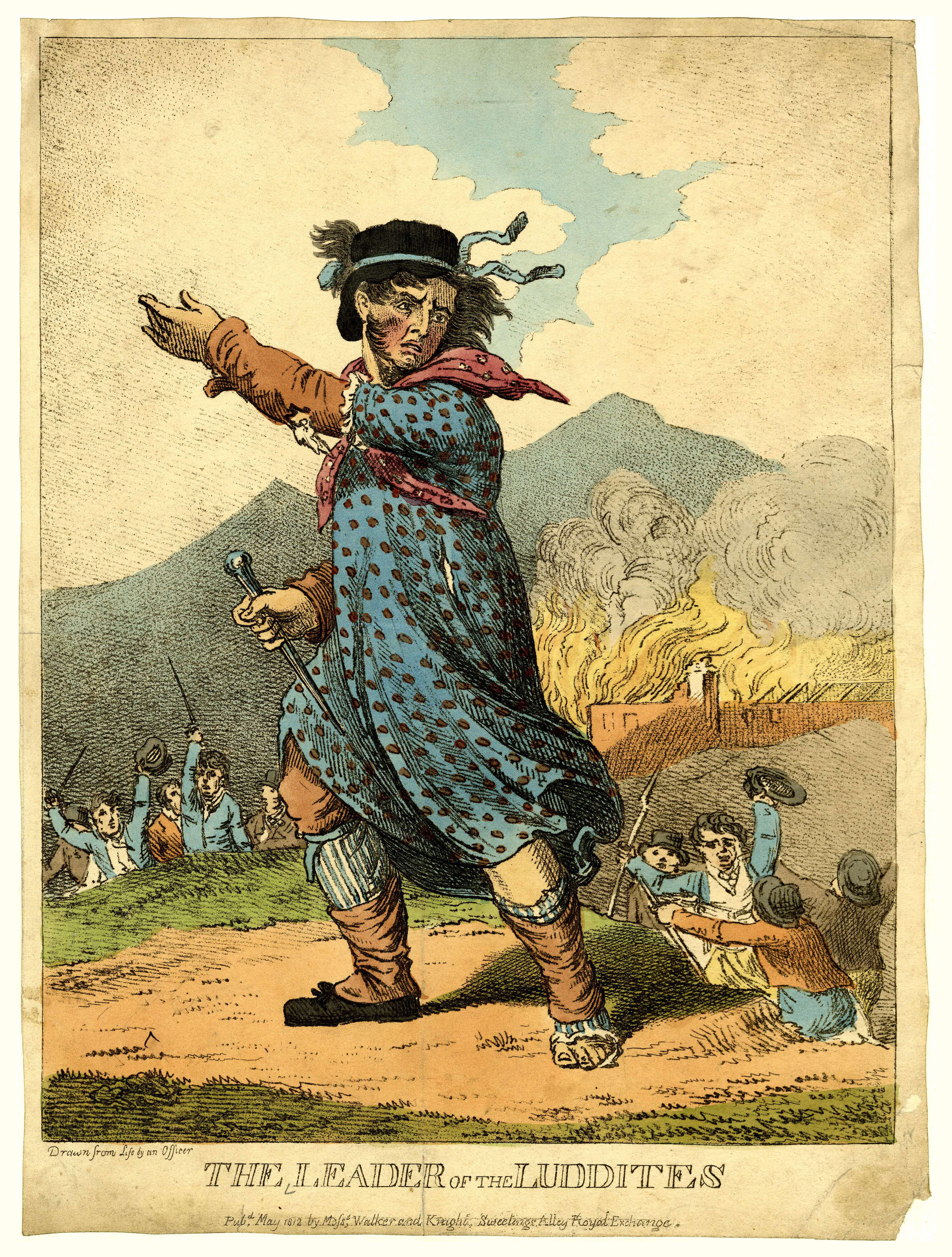
    I'm reminded of something the renowned humanitarian and microbiologist Norman Borlaug had to say on about the "environmentalist" luddites:
    "some of the environmental lobbyists of the Western nations are the salt of the earth, but many of them are elitists. They've never experienced the physical sensation of hunger. They do their lobbying from comfortable office suites in Washington or Brussels...If they lived just one month amid the misery of the developing world, as I have for fifty years, they'd be crying out for tractors and fertilizer and irrigation canals and be outraged that fashionable elitists back home were trying to deny them these things."

    Virtue requires privacy

    Almost anyone can behave while being watched. We learn early in our lives to not act up when those who enforce the rules are watching. What we do when no one else is watching, that is the best expression of our character as it is. While I suppose it is possible for a person always living under a microscope to behave properly out of their own nature, I think it is about as likely that the fat cells encircling my waist will decide to shrink of their own accord. I believe that we need to have the ability to act some of the time without oversight in order to develop character, much as we must occasionally lift heavy objects in order to develop a strong body capable of lifting ever heavier objects.

    John "Anthony Burgess" Wilson explores this theme in his novel "A Clockwork Orange" (which I assume most people have viewed either in print or on film.) The related point (with which I happen to agree) that I got from the film was that since virtue is the choice of good over evil, that if there is no choice, there is no virtue. Interestingly enough the 21st chapter of the book (omitted from both the US edition of the book and film adaptation.)

    This is, of course, one answer to the theodicy problem (i.e. how can suffering (or evil) exist if God exists and God is all-compassionate.) In our dualistic view of the world, where nothing can exist in our awareness without something with which to contrast it (does a fish know that it's wet?) then the background of suffering shows us the joy of the cessation of suffering. The existence of evil shows us the virtue of good.

    As I try to imagine a world without distinction, and world without contrast, the only concept with which my mind keeps arriving is the void, a cessation from existence. Significance requires effort, existence requires sorrow, and freedom requires eternal warfare. This is the wonderful, terrible dance of existence, and as clumsy as I am, I am forever grateful to be here, and be a part of it.