Anyone can believe with proof, but belief in the face of uncertainty demonstrates commitment to the belief that cannot be otherwise shown. Of course, it is one thing for one to believe the unproven, and quite another to impose those beliefs upon others (be it a belief in the Deity or Human-Caused Global Warming, or any other such unproven article of faith.) For the virtue demonstrated in the fastness ones own belief is never present in the victims of oppression.
Of course, belief in the face of obvious evidence to the contrary is idiocy and certainly not virtuous. But I am not thinking here of faith in things demonstrable false, but faith in things whose truth we do not or can not actually know.
I think it can be reasonable asserted that the universe in which we live is rational and ordered. I also believe that, given enough information, we could perfectly discern that order. I see no evidence that we will ever gain enough information do do this, however. The universe is simply too large, and we are too small to handle such large reigns.
Hayek, in his 1945 essay on "The Use of Knowledge in Society," describes the difficulty of human attempts to order society rationally. The solution, it seems, is to allow order to emerge or evolve on its own, giving our faith to this process that results from the crucible of somewhat randomly casting solutions into the primordial sea of existence and allowing them to sink or swim. We are required to have faith in the localized knowledge of the swimmers that we allow them to do as they will and hinder them not at all. For they may know something which we do not. What appears to us as a lack of rhythm may, in fact, be in time to a drummer which we do not yet hear.
Tuesday, April 27, 2010


Monday, April 26, 2010
GMO's are coming for the children!!!!
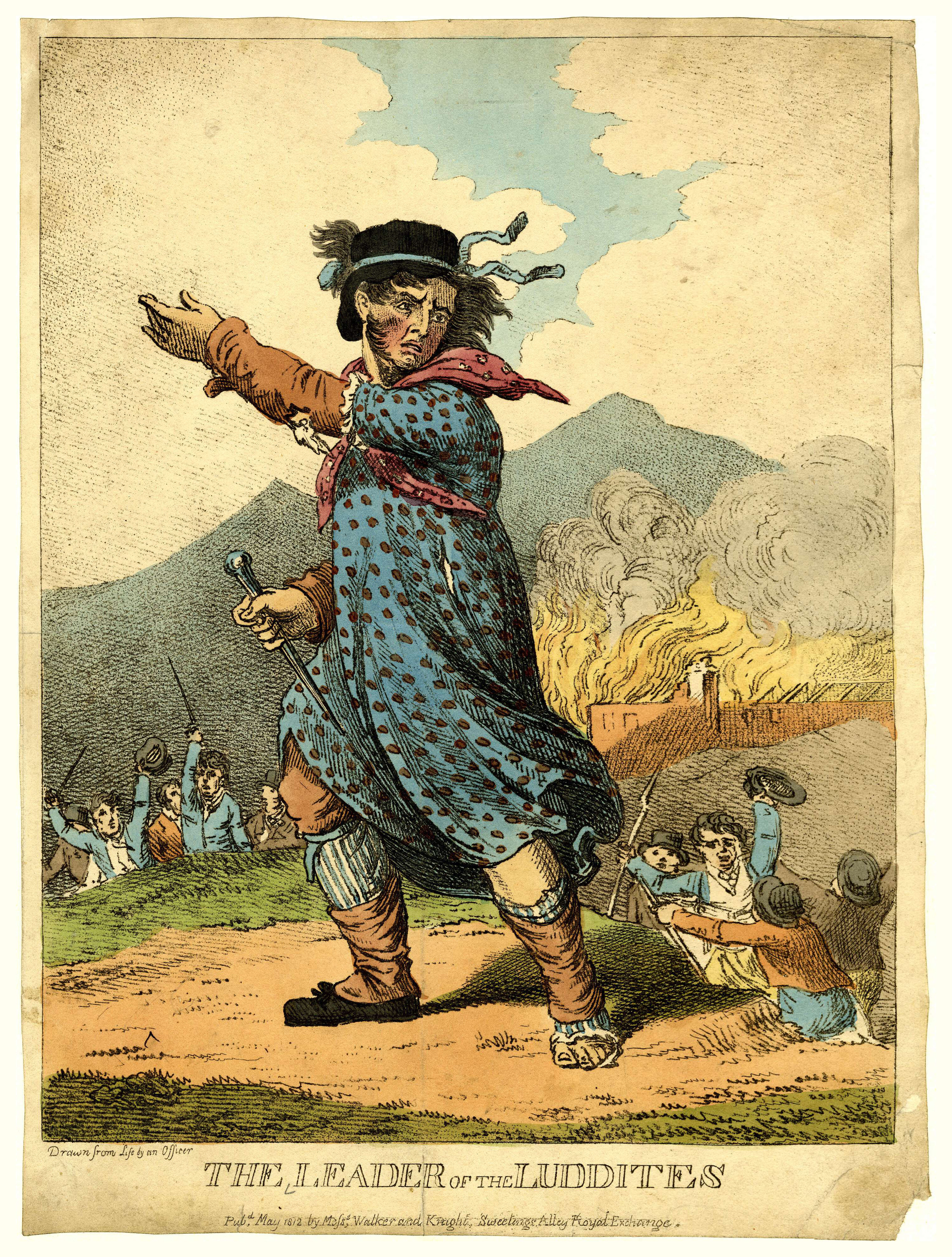 I periodically get emails from this group called CREDO Action (they're a far-left wing group based out of San Francisco who raise money to donate to various leftist political groups.) About once a week or so I get alerted to the latest outrage being perpetrated by the right-wing industrial-complex toadies and their jack-booted thugs who, as we all know, run the world. The latest headline: Stop the sneak attack on food labeling. almost made me spit out my coffee all over my computer. What followed was a semi-coherent conspiracy rant about the WTO, some mysterious "Codex Alimentarius" and that bastion of right-wing neo-con Zionism, the United Nations.
And then some whining about the labeling of "organic" food (as opposed, I suppose to "inorganic" (non-carbon based) food. I know, I know, the "organic" label doesn't really mean squat since the government got involved with it, but I assert that the term itself doesn't mean squat. OK, you might be able to assert that it means "expensive" but nothing more than that.
So they had this on-click-to-sign petition:
"I demand that the U.S. delegation to the Codex Committee on Food Labeling follow sound science and existing U.S. law and FDA policy. The delegation must drop its stated opposition to Codex provisions allowing the labeling of genetically engineered food. Further, the U.S. delegation should generally express positions consistent with current U.S. law and FDA policy which recognize a clear 'difference' between genetically engineered foods and other foods. "How can one request that the government both "follow sound science" and "recognize a clear 'difference' between genetically engineered foods and other foods."??? Find me a structural, definable physical difference between the two categories of food.
I'm reminded of something the renowned humanitarian and microbiologist Norman Borlaug had to say on about the "environmentalist" luddites:
"some of the environmental lobbyists of the Western nations are the salt of the earth, but many of them are elitists. They've never experienced the physical sensation of hunger. They do their lobbying from comfortable office suites in Washington or Brussels...If they lived just one month amid the misery of the developing world, as I have for fifty years, they'd be crying out for tractors and fertilizer and irrigation canals and be outraged that fashionable elitists back home were trying to deny them these things."
Virtue requires privacy
Almost anyone can behave while being watched. We learn early in our lives to not act up when those who enforce the rules are watching. What we do when no one else is watching, that is the best expression of our character as it is. While I suppose it is possible for a person always living under a microscope to behave properly out of their own nature, I think it is about as likely that the fat cells encircling my waist will decide to shrink of their own accord. I believe that we need to have the ability to act some of the time without oversight in order to develop character, much as we must occasionally lift heavy objects in order to develop a strong body capable of lifting ever heavier objects.
John "Anthony Burgess" Wilson explores this theme in his novel "A Clockwork Orange" (which I assume most people have viewed either in print or on film.) The related point (with which I happen to agree) that I got from the film was that since virtue is the choice of good over evil, that if there is no choice, there is no virtue. Interestingly enough the 21st chapter of the book (omitted from both the US edition of the book and film adaptation.)
This is, of course, one answer to the theodicy problem (i.e. how can suffering (or evil) exist if God exists and God is all-compassionate.) In our dualistic view of the world, where nothing can exist in our awareness without something with which to contrast it (does a fish know that it's wet?) then the background of suffering shows us the joy of the cessation of suffering. The existence of evil shows us the virtue of good.
As I try to imagine a world without distinction, and world without contrast, the only concept with which my mind keeps arriving is the void, a cessation from existence. Significance requires effort, existence requires sorrow, and freedom requires eternal warfare. This is the wonderful, terrible dance of existence, and as clumsy as I am, I am forever grateful to be here, and be a part of it.
John "Anthony Burgess" Wilson explores this theme in his novel "A Clockwork Orange" (which I assume most people have viewed either in print or on film.) The related point (with which I happen to agree) that I got from the film was that since virtue is the choice of good over evil, that if there is no choice, there is no virtue. Interestingly enough the 21st chapter of the book (omitted from both the US edition of the book and film adaptation.)
This is, of course, one answer to the theodicy problem (i.e. how can suffering (or evil) exist if God exists and God is all-compassionate.) In our dualistic view of the world, where nothing can exist in our awareness without something with which to contrast it (does a fish know that it's wet?) then the background of suffering shows us the joy of the cessation of suffering. The existence of evil shows us the virtue of good.
As I try to imagine a world without distinction, and world without contrast, the only concept with which my mind keeps arriving is the void, a cessation from existence. Significance requires effort, existence requires sorrow, and freedom requires eternal warfare. This is the wonderful, terrible dance of existence, and as clumsy as I am, I am forever grateful to be here, and be a part of it.
Friday, April 23, 2010
Self-sufficiency is the road to poverty???
So I was thinking about some things Russ Roberts had to say on trade and the advantages of specialization that lead to material prosperity. I'm not going to repeat everything he had to say here, but the gist of it was that he made some really convincing arguments to the effect that we all become significantly wealthier by doing our job and paying others to do their jobs than we would have been if we did everything for ourselves. I accept the basic argument, but I wonder sometimes, about why it is that we hold self-sufficiency in such high regard if it's really a dis-advantage.
In particular, I wonder about my own personality, my own desire to build or fix things myself. To figure out how to make things work, whether they're related to my field of specialization or not. I think that this desire for this behavior is what enabled me to do the sort of technical work that I do. I also think that by acting out on this desire, the logical training imposed on my mind in troubleshooting an automotive problem, designing a solution to running electric service in support of a particular activity, or discovering the source of a plumbing problem. The lessons I had to learn growing up to solve these problems I can apply in different ways to the problems I am confronted at work as I try to break down business practices into their smallest logical steps, discover the points that require no complex decision making, and come up with ways to automate and facilitate those processes.
In particular, I wonder about my own personality, my own desire to build or fix things myself. To figure out how to make things work, whether they're related to my field of specialization or not. I think that this desire for this behavior is what enabled me to do the sort of technical work that I do. I also think that by acting out on this desire, the logical training imposed on my mind in troubleshooting an automotive problem, designing a solution to running electric service in support of a particular activity, or discovering the source of a plumbing problem. The lessons I had to learn growing up to solve these problems I can apply in different ways to the problems I am confronted at work as I try to break down business practices into their smallest logical steps, discover the points that require no complex decision making, and come up with ways to automate and facilitate those processes.
School zones on my daily commute
So I drive past a school every morning on my way to work, and I've yet to see a single child anywhere in the schoolyard. Yet the school zone demands that I not exceed 20mph - it's for the children, don't you know. Yet I do see a number children waiting to be picked up by the bus on my morning commute, and never a school speed zone to protect them from the dangers of the cars that speed past them.
Perhaps I shouldn't say this out loud (lest some authoritarian hear and implement this) but if we're going to reduce auto speeds and generate traffic bottlenecks near schools (which seem to be peppered throughout the city) "for the children" the why is it that we don't just limit traffic speeds for the entire country (excluding perhaps highways where there wouldn't be any kids waiting for a ride to school) to 20 mph from 6-8 am and 2-4 pm?
Of course a nationwide 20 mph during commute hours is a STUPID idea, and that's part of my point in suggesting it. The other part being the idiocy of placing bottleneck school zones throughout every city in the United States. Now there are probably a lot of schools where it is appropriate to require speed zones, places where there may not be fences or high walls surrounding them. Places where some of the students walk along the sidewalk to get there. I think those are totally appropriate places to require speed reductions. And, to be fair, I suspect that most schools fall into that category. But not all of them, probably not even a sizable minority of them.
The more general idea I'm on here is that I think it better to deal with situations on their own rather than with blanket, one-size-fits-all policies. Put appropriate school zones as necessary where they can be defended, because they should need to be defended - they impose a time cost on the rest of society, and given that time is one measure of life, that is a cost to the mortality of us all.
Perhaps I shouldn't say this out loud (lest some authoritarian hear and implement this) but if we're going to reduce auto speeds and generate traffic bottlenecks near schools (which seem to be peppered throughout the city) "for the children" the why is it that we don't just limit traffic speeds for the entire country (excluding perhaps highways where there wouldn't be any kids waiting for a ride to school) to 20 mph from 6-8 am and 2-4 pm?
Of course a nationwide 20 mph during commute hours is a STUPID idea, and that's part of my point in suggesting it. The other part being the idiocy of placing bottleneck school zones throughout every city in the United States. Now there are probably a lot of schools where it is appropriate to require speed zones, places where there may not be fences or high walls surrounding them. Places where some of the students walk along the sidewalk to get there. I think those are totally appropriate places to require speed reductions. And, to be fair, I suspect that most schools fall into that category. But not all of them, probably not even a sizable minority of them.
The more general idea I'm on here is that I think it better to deal with situations on their own rather than with blanket, one-size-fits-all policies. Put appropriate school zones as necessary where they can be defended, because they should need to be defended - they impose a time cost on the rest of society, and given that time is one measure of life, that is a cost to the mortality of us all.
Thursday, April 15, 2010
Give Me Convenience or Give Me Wal-Mart
I think one of the reasons I like to shop in stores rather than simply buying everything by mail is the convenience of being able to quickly get what I want with the minimum hassle. I'm willing to pay a bit of a premium for that convenience both in the cash I give them and in the time I spend in their store.
In the case of Wal-Mart recently, the cost to me in terms of my time has been increased to the point where it's become cheaper for me to do my grocery shopping at a regular grocery store (in terms of time spent in the checkout line AND time spent walking through the store to find what I want) and I'm finding lower price other items on-line (not only the dollar price, but it does seem to take a lot less time to check out, even for those obnoxious sites that demand you register with them.)
And, of course, on-line merchants they don't hassle you about boxes. What a strange thing to hear about them being stingy with their empty, trashed boxes.
So, from Wal-Mart and the Internet to recycling and lawsuits, to not letting the terrorists win.... forget tangents, I'm off on cosecants....
In the case of Wal-Mart recently, the cost to me in terms of my time has been increased to the point where it's become cheaper for me to do my grocery shopping at a regular grocery store (in terms of time spent in the checkout line AND time spent walking through the store to find what I want) and I'm finding lower price other items on-line (not only the dollar price, but it does seem to take a lot less time to check out, even for those obnoxious sites that demand you register with them.)
And, of course, on-line merchants they don't hassle you about boxes. What a strange thing to hear about them being stingy with their empty, trashed boxes.
- So maybe they're recycling them, but I believe that recycling cardboard costs more than it produces (as evidenced by the fact that no one will pay for your used cardboard boxes - if it made any economic sense, a market would have emerged to draw whatever economic benefit could be had from it.) So the recycling has to be a public relations thing, and given that, it should follow that to give the boxes to a customer (who would, btw, be making a more efficient recycling use of the box than could possibly result from crushing it in a compactor) and it builds more goodwill since they would be materially benefiting a specific individual directly.
- Maybe it's a legal liability thing. Perhaps if they gave the box to Erin and she threw out her back because she completely filled a 10 cubic foot box with books and tried to pick it up, some creative lawyer could weave a legal theory of liability out of whole cloth. While we seem to have become a much more litigious society in the past several decades, I still have a hard time accepting the BS fear of some lawsuit-happy crank being the basis for modifying ones behavior in daily life. Trying to appease those people is like trying to appease fanatical religious terrorists - the truth is that the justifications for their actions that they come up with are lies - they don't really care about us being sinful or what not, they hate us for not bowing down to them, and until we turn over out lives to their care, they will continue to come after us.
So, from Wal-Mart and the Internet to recycling and lawsuits, to not letting the terrorists win.... forget tangents, I'm off on cosecants....
Tuesday, April 13, 2010
Early morning at Wal-Mart
My time is somewhat scarce, but I really like the prices at Wal-Mart, and there is a store on my way to work that is really convenient for me. I have taken to shopping there early in the morning to avoid the crowds and long checkout lines that I have gotten used to expecting at other times during the day.
This morning, around 6:30, after doing some shopping, I went to check out so I could get on my way to work. There were only 2 lines open, one line had, I think, about 7 people in it, and the only other line open at the time had 5 people, but one of those people had 2 baskets full (top to bottom) and so I decided to go to the line with 7 people. After a few minutes, the cashier (whose light was still on) informed me that she was actually closed and that I should go to another line. This is not the first time I've seen cashiers there do this, but this was the first time it was done to me.
I left my basket there, in line, and walked out of the store. I drove to the Albertsons across the street and paid a little more, but was in and out much faster. I will never return to that Wal-Mart, and it will probably be a while before I return to another one.
Now, I know that I'm probably over-reacting to this single incident, and this is a really inconsequential thing in the grand scheme of things, but there's just something about having to wait needlessly that drives me batty. I hate waiting in traffic, and will go 10 miles out of my way to avoid spending 10 minutes in gridlock.
I remember back before Sam Walton died, the Super Wal-Mart I shopped at had signs by the cash registers stating their guarantee to a fast checkout and that they would open up a new register if there were more than 3 people in any given line. Those days are LONG gone.
Wal-Mart may have figured out the way to the lowest prices anywhere, and I am thankful for the efficiencies they have brought to the retail market, but my cost of shopping there has been increasing in the amount of time it takes to make it through the checkout. Time is money, and the money I was saving there has now been outweighed by the cost of my time.
When it is Wal-Mart's time to lose out to another store, it will not be to lower prices, it will be to better service.
This morning, around 6:30, after doing some shopping, I went to check out so I could get on my way to work. There were only 2 lines open, one line had, I think, about 7 people in it, and the only other line open at the time had 5 people, but one of those people had 2 baskets full (top to bottom) and so I decided to go to the line with 7 people. After a few minutes, the cashier (whose light was still on) informed me that she was actually closed and that I should go to another line. This is not the first time I've seen cashiers there do this, but this was the first time it was done to me.
I left my basket there, in line, and walked out of the store. I drove to the Albertsons across the street and paid a little more, but was in and out much faster. I will never return to that Wal-Mart, and it will probably be a while before I return to another one.
Now, I know that I'm probably over-reacting to this single incident, and this is a really inconsequential thing in the grand scheme of things, but there's just something about having to wait needlessly that drives me batty. I hate waiting in traffic, and will go 10 miles out of my way to avoid spending 10 minutes in gridlock.
I remember back before Sam Walton died, the Super Wal-Mart I shopped at had signs by the cash registers stating their guarantee to a fast checkout and that they would open up a new register if there were more than 3 people in any given line. Those days are LONG gone.
Wal-Mart may have figured out the way to the lowest prices anywhere, and I am thankful for the efficiencies they have brought to the retail market, but my cost of shopping there has been increasing in the amount of time it takes to make it through the checkout. Time is money, and the money I was saving there has now been outweighed by the cost of my time.
When it is Wal-Mart's time to lose out to another store, it will not be to lower prices, it will be to better service.
Subscribe to:
Posts (Atom)